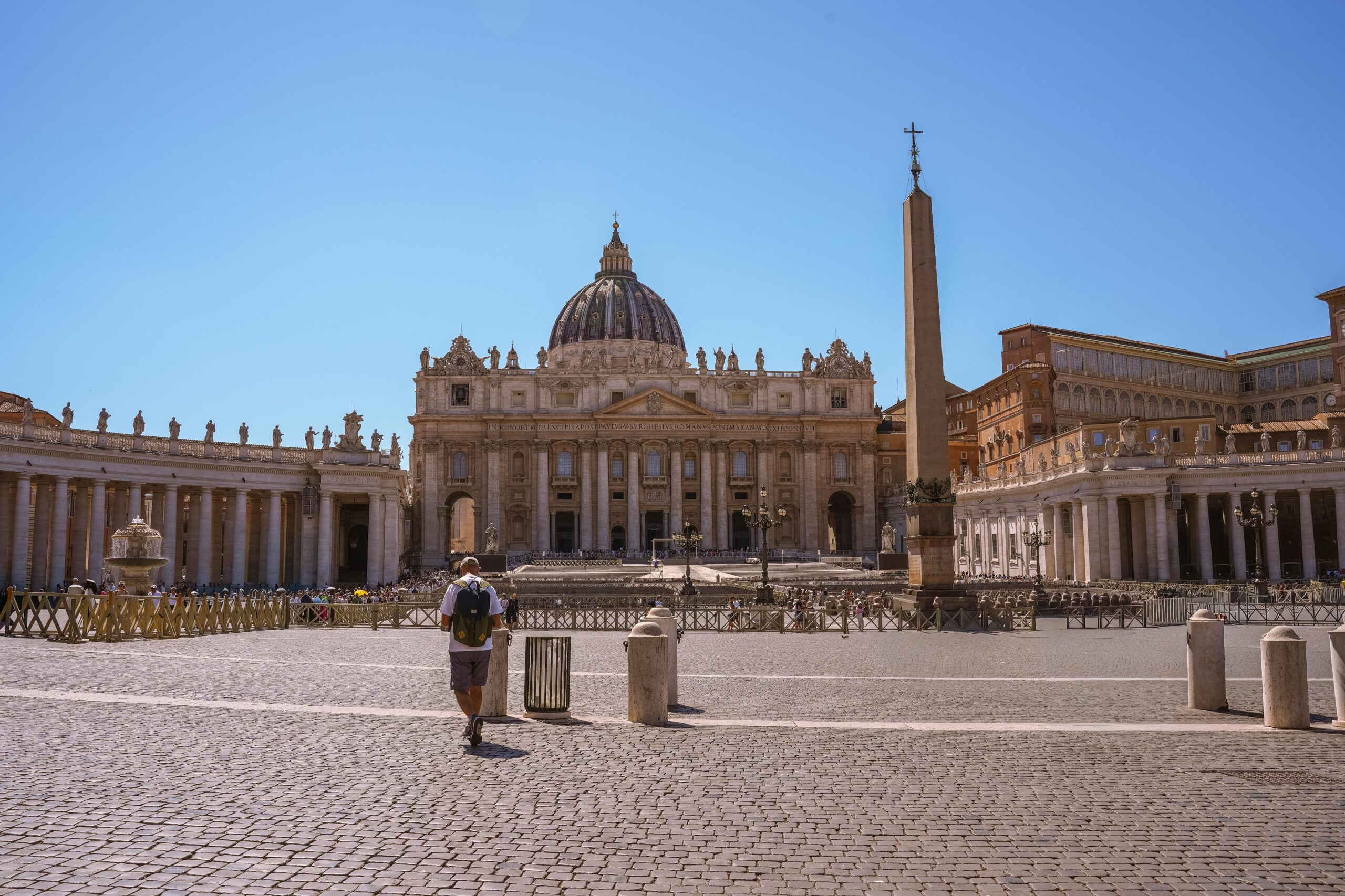
How to Spend One Perfect Day in Vatican City: Museums, No‑Line Tips, and St. Peter’s Square Magic
Visiting Rome always feels like stepping into a living museum, but on this trip, I carved out one full day to cross something big off my list — Vatican City. I’d been to Rome before, but never with enough time to truly explore the Vatican Museums or linger in St. Peter’s Square. This time, I made it happen. And honestly, it became one of the most memorable days of my entire stay.
Before You Go: How to Prepare for a Perfect Vatican Day
What surprised me most wasn’t just the art or the architecture — it was how much smoother and more enjoyable the day became with a little preparation. If you’re planning your own Vatican adventure, here’s exactly how my day unfolded and what I learned along the way.

I learned very quickly that the Vatican rewards the prepared. Here’s what made all the difference:
- Book your Vatican Museum tickets in advance. I cannot stress this enough. The walk‑up line wrapped around the walls like a slow‑moving river of regret. Going to the Vatican Museums without a reservation is basically a rite of passage… but one you only want to experience once. My timed-entry ticket let me walk right in.
- Choose an early time slot. The earlier you go, the cooler it is, the quieter it feels, and the more time you have to explore without rushing.
- Dress appropriately. Shoulders and knees covered — simple, but essential. I saw plenty of people turned away at the basilica security line.
- Bring water and comfortable shoes. The museums are huge. You’ll walk more than you expect.
- Know the flow. Once you enter the museums, the path is mostly one-directional. Take your time — you won’t be looping back.
Thankfully, I had booked my timed-entry ticket the night before. I slipped into the “skip-the-line” entrance, walked past the crowds, and felt like I had unlocked a secret level of Rome.
With all that sorted, I stepped inside ready for the day.
Highlights of the Vatican Museums: What Truly Stood Out
Walking into the Vatican Museums feels like entering a world where every hallway, ceiling, and corner has something to say. These were the moments that stopped me in my tracks:
The Gallery of Maps
One of the most breathtaking moments inside the Vatican Museums came long before I reached the Sistine Chapel. It happened in a corridor — a very long one — stretching 120 meters in length and glowing with color. This is the Gallery of Maps, and walking through it felt like stepping into a living atlas.

Both walls are covered with forty enormous frescoed maps, each one depicting a different region of Italy. They’re not just geographical; they’re storytelling pieces. Many include detailed renderings of major towns and cities, painted with such precision that you can almost imagine life unfolding inside them. Above, the ceiling bursts with scenes of religious events tied to each region, creating a layered narrative that blends faith, history, and geography into one sweeping visual journey.
The Raphael Rooms
One of the moments that truly stopped me inside the Vatican Museums was stepping into the Raphael Rooms — four interconnected chambers that feel like walking straight into the mind of a Renaissance genius. These rooms, often called the Vatican Rooms, take their name from Raphael of Urbino, who painted them with the help of his pupils.

The story behind them is almost as fascinating as the art itself. At the beginning of the 16th century, Pope Julius II decided he wanted something extraordinary for his private apartments. After being unimpressed with the work of several other artists, including Perugino, he turned to Raphael — a young painter whose talent was already turning heads in Rome.
Raphael began the project in 1508, and what he created over the next twelve years became some of the most celebrated fresco cycles in the world. He worked on them until his death in 1520, after which his pupils — especially Giulio Romano, one of his closest collaborators — completed the remaining sections in 1524.

The four rooms each have their own identity and theme:
- Room of the Segnatura — home to The School of Athens, one of the most iconic frescoes of the Renaissance.
- Room of Heliodorus — dramatic scenes filled with movement and divine intervention.
- Room of the Fire in the Borgo — storytelling through vivid, almost cinematic frescoes.
- Hall of Constantine — completed after Raphael’s death, celebrating the triumph of Christianity.
The Tapestry Gallery
As I continued deeper into the Vatican Museums, the energy shifted. The bright colors of the Gallery of Maps faded behind me, and I stepped into a dimmer, quieter space that felt almost sacred in its stillness — the Tapestry Gallery. It’s one of those places where the noise of the crowds seems to soften on its own, as if the room itself asks for a slower pace.

The gallery is lined with enormous tapestries, many of them created in the 16th century by Flemish weavers from the workshop of Pieter van Aelst. These weren’t just decorative pieces; they were masterpieces of craftsmanship, woven with silk, wool, and threads of gold and silver. Standing in front of them, I could see how the metallic fibers caught the light, giving the scenes a subtle shimmer that made them feel alive.

What struck me most was the storytelling. Each tapestry is like a frozen moment from a much larger narrative — biblical scenes, dramatic events, and emotional expressions captured in thread rather than paint. Some depict episodes from the life of Christ, others from the life of the apostles. The level of detail is astonishing: folds of fabric, expressions on faces, even the texture of stone buildings rendered through weaving
The Sistine Chapel
Reaching the Sistine Chapel at the end of the Vatican Museums felt like arriving at the heart of the entire journey. After weaving through galleries, corridors, and centuries of art, stepping into this room — one of the greatest masterpieces of the Renaissance — was nothing short of overwhelming.

The chapel we see today was originally the Magna Chapel, restored between 1477 and 1480 under Pope Sixtus IV della Rovere, who later gave it his name. It was dedicated to Maria Assunta in Cielo, and from the beginning it was meant to be a place of deep spiritual and artistic significance.

Even now, the Sistine Chapel remains one of the most important spaces in the Catholic world. This is where the conclave gathers to elect a new Pope, where baptisms and official papal ceremonies take place, and where history has quietly turned its pages for centuries. Standing there, it’s impossible not to feel the weight of those moments.
The Spiral Staircase (Bramante Staircase)
Designed in 1932 by Giuseppe Momo, this staircase isn’t just beautiful; it’s brilliantly engineered. Its most fascinating feature is the way it’s built as two intertwined staircases, one for ascending and one for descending, forming a continuous double helix. Because of this design, people going up never cross paths with those coming down. It’s orderly, elegant, and surprisingly calming after the sensory overload of the galleries.

The staircase itself feels almost sculptural. Wide, sweeping curves guide you gently downward, framed by a wrought‑iron balustrade that spirals with you. Light pours in from above, catching the metallic details and giving the whole structure a soft glow. After the intensity of the Sistine Chapel and the richness of the Raphael Rooms, this descent feels like a deep breath — a graceful transition from centuries of art back into the modern world.
It’s no wonder this staircase has become one of the most photographed spots in the Vatican. For me, it was the perfect ending: a moment to slow down, look back, and let everything I’d seen settle in.
Things to See at St. Peter’s Square
Leaving the museum it was already dark. I followed the curve of the Vatican walls until the space suddenly opened up — St. Peter’s Square. No matter how many photos you’ve seen, nothing prepares you for the scale.
Here’s what I made sure to take in:
The Colonnades by Bernini
When I stepped into St. Peter’s Square, the first thing that struck me wasn’t the basilica itself — it was the feeling of being held. That sensation comes from the massive, sweeping colonnades designed by Gian Lorenzo Bernini, one of the greatest sculptors and architects of the Baroque era.

Built between 1656 and 1667, these colonnades form two enormous semicircles made up of 284 Doric columns arranged in four perfect rows. Bernini designed them to symbolize the “welcoming arms of the Church,” embracing visitors as they enter the square. And honestly, standing there, you feel that symbolism immediately.
But the real magic happens when you stand in the exact spot Bernini intended. If you walk around the square, you’ll notice two circular marble markers set into the pavement. These are called the “centro del colonnato” points — the center points of the colonnades.

From this spot, the colonnades look impossibly thin and perfectly ordered, almost like a trick of the eye. Step even a few feet away, and the illusion disappears, revealing the massive depth and complexity of the structure.

The Central Obelisk
Right at the center of St. Peter’s Square stands something that predates the basilica, the colonnades, and even Christianity itself — the Vatican Obelisk. No matter how many times I’ve seen photos of the square, nothing prepared me for the moment I walked into that vast open space and saw this towering column of red granite rising above everything else. It feels like the square was built around it, and in many

This obelisk is over 4,000 years old, originally quarried in Egypt and brought to Rome by Emperor Caligula in 37 AD. It once stood in the center of his circus — the very place where tradition says St. Peter was martyred. Knowing that gives the obelisk a kind of gravity that you can feel just by standing near it.
The Fountains
As I wandered deeper into St. Peter’s Square, past the obelisk and beneath Bernini’s sweeping colonnades, something subtle but powerful caught my attention — the sound of water. It softened the noise of the crowds, added movement to the stillness of the architecture, and gave the square a sense of calm that I didn’t expect. That soothing rhythm comes from the two monumental fountains that anchor the piazza on either side of the obelisk.

Standing near them, I realized they’re not just decorative pieces. They’re part of the heartbeat of the square. For me, they were the perfect places to pause, breathe, and take in the square from different angles. In a place filled with history and grandeur, the fountains add something simple and human — the calming presence of flowing water.
St. Peter’s Basilica (from the outside)
Even without stepping inside, the basilica gives you a sense of awe. The scale, the symmetry, the way the light hits the travertine — it all works together to make you stop, breathe, and take in the moment. Sometimes the outside view is enough to remind you why millions of people travel across the world just to stand here.

The façade rises like a wall of sculpted stone, grand yet perfectly balanced, and above it all the dome towers over the square. It doesn’t just sit on the skyline — it commands it. From the ground, it feels almost weightless, like it’s lifting upward on its own. There’s a reason people call it one of the greatest domes ever built; it looks like a promise made in architecture.
The View Back Toward Rome
Turn around before you leave. The perspective of the square opening toward the city is one of the most beautiful frames in Rome.
Conclusion: A Day That Stays With You
My day in Vatican City wasn’t just another sightseeing stop — it felt like stepping into the heart of history, art, and spirituality all at once. With a little planning, I avoided the stress, skipped the lines, and actually had time to enjoy every moment.
If you’re visiting Rome, give yourself the gift of a full day here. Wander the museums slowly. Let the Sistine Chapel sink in. Stand in St. Peter’s Square until the light changes. It’s one of those rare places where the world feels bigger and smaller at the same time.