Cividale del Friuli: Top Sights & Friulian Flavors
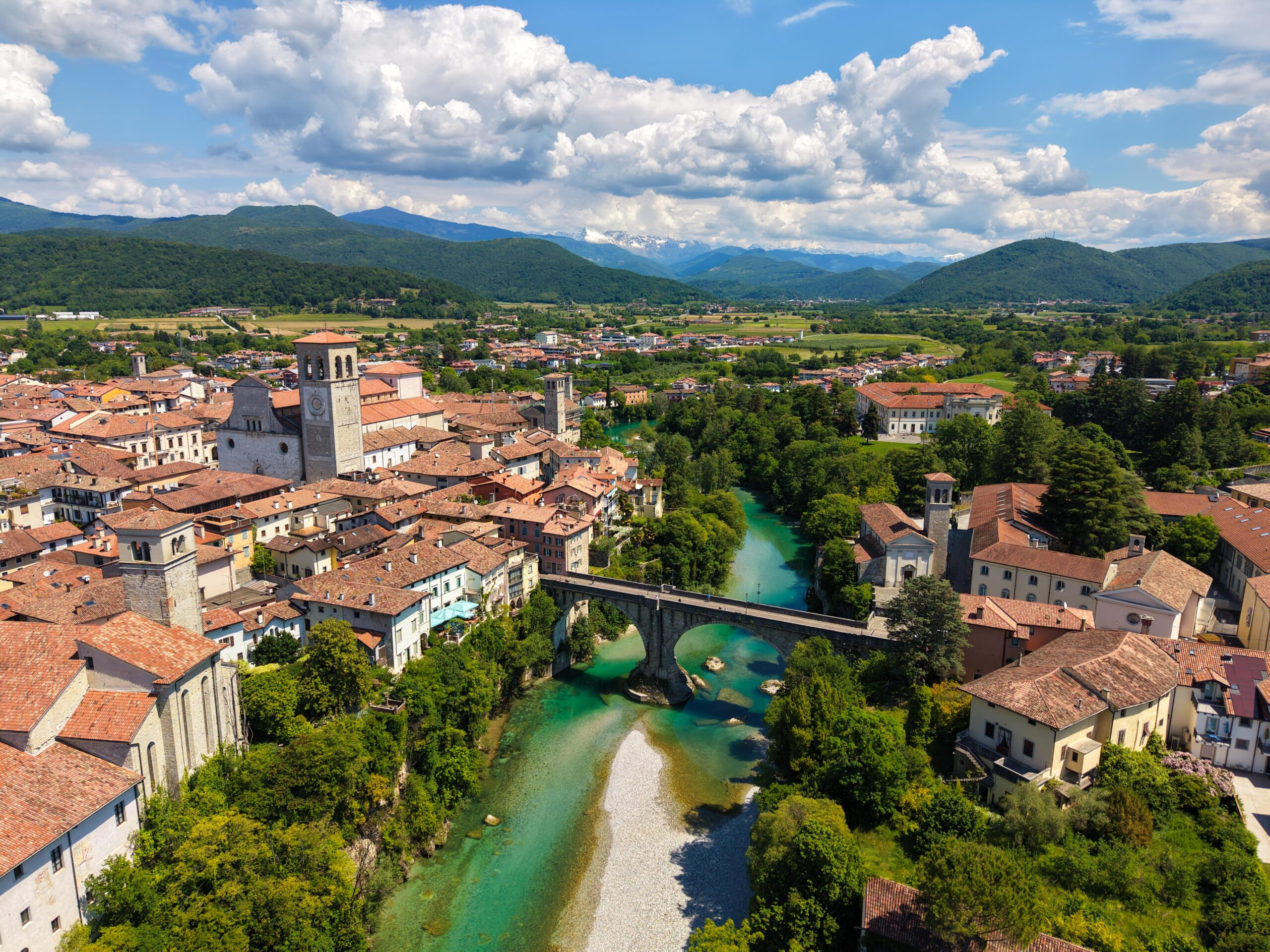
If Italy had a town designed for slow wandering and long sips of local wine, it would be Cividale del Friuli. Nestled near the Julian Alps and divided by the emerald ribbon of the Natisone River, this quiet corner of Friuli‑Venezia Giulia feels suspended between ancient legends and the easy rhythm of late‑afternoon aperitivo. You come to Cividale not just for its cobbled streets or the views from the Devil’s Bridge, but for that rare blend of soul, silence, and story that lingers in every piazza. This isn’t simply a beautiful place—it’s a living tapestry of Roman roads, Lombard secrets, and sacred spaces that have shaped the region for centuries. And when you’re ready for a slower kind of magic, the wineries surrounding Cividale offer the perfect pairing: bold Friulian vintages, timeless landscapes, and the effortless charm that makes this part of Italy unforgettable.
I’d been wanting to visit Cividale del Friuli for a long time, and finally having a free day to explore it felt like a small victory. Living just about an hour away, it made perfect sense to turn it into a personal day trip—no rush, no schedule, just me and a town I’d been curious about for years. What followed was a slow, beautiful unfolding of moments, each one its own chapter in a day I’m glad I finally took.
About Cividale del Friuli
Cividale is a town built on stories. Founded by Julius Caesar as Forum Julii, it later became one of the most important Lombard capitals in Italy. Today, it’s recognized as a UNESCO World Heritage Site, thanks to its extraordinary early‑medieval architecture and its role in shaping the identity of Friuli Venezia Giulia. Friuli’s pulse can be felt here.
Walking through Cividale feels like stepping into a living timeline. Roman foundations, Lombard masterpieces, medieval piazzas, and Venetian influences all coexist within a compact, walkable center. It’s a place where history isn’t just preserved—it’s part of everyday life.
Cividale & Italy’s Gastronomy: Where Culture Meets Flavor
Before I tell you about some of the sites, let’s talk about food & drink. Friuli Venezia Giulia is one of Italy’s most underrated food and wine regions, and Cividale sits right in the heart of it. Here, gastronomy isn’t just a part of the culture—it is the culture.
Wine Heritage
The hills surrounding Cividale belong to the Colli Orientali del Friuli, one of Italy’s premier DOC zones. This area is known for producing some of the country’s most expressive whites and character‑driven reds, including:
- Friulano – the region’s signature white
- Ribolla Gialla – crisp, mineral, and unmistakably Friulian
- Schioppettino – peppery, elegant, and native to the region
- Refosco dal Peduncolo Rosso – dark, rustic, and deeply local

These wines reflect centuries of tradition, shaped by Alpine breezes, Adriatic influence, and the unique microclimate of Italy’s Northeastern hills.
Food Culture
Friulian cuisine is humble, hearty, and rooted in local ingredients. In and around Cividale, you’ll find:
- Frico – crispy Montasio cheese
- Cjarsons – sweet‑savory ravioli with herbs and spices
- Prosciutto di San Daniele – one of Italy’s most prized cured hams
- Gubana – a traditional spiral pastry filled with nuts and raisins
Cividale’s gastronomy is a blend of Alpine comfort, Venetian finesse, and Slavic influence—making it one of Italy’s most unique culinary crossroads.
Things to See in Cividale del Friuli
Wandering the streets of any town is always one of my favorite things to do, which is how I usually start all my exploring. I should probably start having a researched plan for future travels, but let me point out a a few things that caught my interest.
Cividal del Friuli Historic Center
Wandering through Cividale’s historic center was one of those experiences that reminded me why I love exploring small Italian towns. The moment I stepped into the old streets, everything seemed to slow down. The cobblestones felt worn from centuries of footsteps, the pastel façades leaned gently toward one another, and every narrow alley hinted at a story waiting just around the bend.


I spent time simply walking—no map, no plan—letting the town guide me. Small piazzas opened like quiet stages, each with its own rhythm: locals chatting over espresso, the soft clinking of cups, the occasional bicycle rolling past. The buildings carried layers of history in their arches, balconies, and carved stone details. Even the shadows felt different here, stretching across medieval walls that have seen Roman soldiers, Lombard nobles, and generations of Friulian families.

Every turn offered something new: a tiny artisan shop, a hidden courtyard, a church door left slightly open, inviting curiosity. The scent of fresh pastries drifted from cafés, mixing with the warm breeze coming off the Natisone River. It’s the kind of center you don’t rush through—you wander, you pause, you look up, and you let the town reveal itself one quiet moment at a time.
National Archaeological Museum: Stepping Into Cividale’s Ancient Past
My visit to the National Archaeological Museum felt like opening the first pages of Cividale’s oldest chapters. The building itself carries a quiet dignity, but it’s what waits inside that truly pulls you back through time. Room after room is filled with artifacts that once belonged to the Lombards—intricate jewelry, finely worked metal pieces, carved stone slabs, and everyday objects that somehow survived the centuries. Each display feels like a small window into a world that shaped this region long before modern Italy existed.

What struck me most was how personal many of the items felt. The museum doesn’t just present history; it lets you stand face‑to‑face with it. You see the craftsmanship in a warrior’s belt buckle, the delicate patterns etched into a brooch, the solemn beauty of funerary stones. These aren’t just archaeological finds—they’re fragments of real lives lived here more than a thousand years ago.


Walking through the museum gave me a deeper appreciation for Cividale’s identity. It’s one thing to stroll the medieval streets and admire the architecture, but it’s another to see the objects that belonged to the people who built this town’s earliest foundations. By the time I stepped back outside, I felt like I understood Cividale not just as a beautiful place, but as a crossroads of cultures, empires, and stories.
Cividale’s Oldest Caffè – Caffè San Marco 1793
After my visit to the National Archaeological Museum, I wandered back toward the Duomo and settled at Caffè San Marco 1793, letting the spring air wrap gently around the old portico. I ordered a glass of Friulano, that unmistakably local white with its soft almond finish, and sat beneath the historic arches watching Cividale move at its unhurried pace. The sunlight spilled across the piazza, conversations drifted in and out like warm currents, and for a moment the entire town felt suspended between centuries — a perfect pause in the heart of Friuli.

Cividale’s Duomo
Right across the bar, The Duomo di Santa Maria Assunta stands. A quiet giant of pale stone that anchors the entire historic center. Its current form dates to the 15th century, when architect Bartolomeo delle Cisterne rebuilt the church in a refined late‑Gothic style after earlier structures had fallen into disrepair. The façade is intentionally sober — almost monastic — but step closer and you notice the delicate sculptural details, the rhythm of the pilasters, and the way the building seems to glow softly in the morning light. Inside, the atmosphere shifts: the nave opens into a spacious, luminous interior where Renaissance lines meet Venetian influences, creating a sense of calm that feels almost suspended in time.


What truly sets the Duomo apart, though, is the treasure it guards. In the left transept sits the Altare del Patriarca Pellegrino II, a masterpiece of 12th‑century Lombard stone carving, originally from the ancient basilica of the patriarchs. Its intricate reliefs — apostles, symbols, and geometric motifs — are some of the most important medieval artworks in Friuli. Nearby, paintings by Pomponio Amalteo and Giovanni Antonio de’ Sacchis (Il Pordenone) add layers of Renaissance color and drama. Standing inside the Duomo, you feel the weight of centuries of devotion, artistry, and regional identity. It’s not just a church; it’s a living archive of Cividale’s spiritual and cultural history.
Cividale del Friuli’s Ponte del Diavolo
No visit to Cividale feels complete without stepping onto the Devil’s Bridge, the town’s most iconic vantage point. As you walk across its stone arch, the emerald Natisone River unfurls beneath you, clear and impossibly green, carving its way through the narrow gorge. The cliffs rise sharply on both sides, framing the water like a natural amphitheater, and the medieval houses perched above seem to lean in just enough to watch the river pass.

Pause in the middle and the whole scene becomes a living postcard. The bridge, the river, the cliffs, and the soft Friulian light all come together in a way that feels almost staged — yet completely authentic. It’s no wonder this spot is one of the most photographed in Friuli; every angle offers a new composition, every moment a different shade of green. Standing there, you understand instantly why the Devil’s Bridge is more than a landmark — it’s the town’s signature view.
The Monastery of Santa Maria in Valle and Lombard Temple : A Quiet Sanctuary of History
After wandering through the center, one of the most meaningful stops of my day was the Monastery of Santa Maria in Valle, a peaceful complex tucked along the Natisone River. Stepping inside feels like entering a different rhythm—slower, quieter, and deeply connected to Cividale’s spiritual past.

The monastery itself dates back to the early Middle Ages and has been shaped by centuries of religious life, architectural evolution, and Lombard influence. Its cloisters, soft stone arches, and serene courtyards create an atmosphere that invites you to pause and breathe. It’s the kind of place where history doesn’t shout; it whispers.
The highlight, of course, is the Tempietto Longobardo, located within the monastery grounds. This small chamber is one of the most extraordinary Lombard structures in Europe, featuring delicate stucco angels, intricate carvings, and frescoes that have survived more than a millennium. Standing inside, I felt the weight of time settle around me — a reminder of how deeply Cividale’s identity is tied to its sacred spaces.


Even outside the Tempietto, the monastery offers beautiful river views, quiet corners for reflection, and a sense of calm that contrasts beautifully with the lively streets just beyond its walls. It’s a stop that adds depth to any visit — a moment of stillness in a town filled with stories.
Church of San Pietro and San Biagio
The Church of San Pietro e San Biagio in Cividale del Friuli is one of those small, quietly magnificent places where the town’s medieval soul feels most alive. Tucked into Piazzetta San Biagio in Borgo Brossana—just steps from the Tempietto Longobardo and the Natisone River—it’s easy to pass by without realizing how much history is layered into its modest stone walls. But once you step closer, the story unfolds.

The church’s origins reach back to the 13th century, when a small chapel dedicated to San Pietro Apostolo stood here under the care of the nearby Benedictine monastery of Santa Maria in Valle. Over time, two additional devotional chapels—one for San Giacomo and one for San Biagio—were added.
The façade is simple but striking. In 1492, master stonecutters Biagio de’ Meritis and Toni de Locria carved the elegant gothic‑fiorito portal, still beautifully preserved.
Lunch in Cividale: Eating at Leon de’Oro (and Other Great Options)

By midday, I was more than ready to sit down for a proper Friulian meal, so I headed to Leon de’Oro, a cozy and traditional restaurant right in the heart of Cividale. The moment I stepped inside, I felt that familiar warmth you only get from long‑standing family kitchens—wooden interiors, friendly staff, and dishes that taste like they’ve been perfected over generations. They also have an outdoor seating area. I had the ravioli and Rico with polenta along a glass of Friulano.


My meal was hearty, comforting, and exactly what you want after a morning of exploring ancient streets and museums.
If you’re planning your own visit and want to explore more of Cividale’s food scene, here are a few other excellent places worth considering:
- Osteria Trattoria al Castello — Known for rustic Friulian dishes and a charming, intimate setting near the historic center.
- Ristorante Al Monastero — A refined option offering beautifully plated regional cuisine inside a historic building.
- Osteria Antico Leon d’Oro — A classic choice for traditional Friulian comfort food with a welcoming atmosphere.
- Enoteca De Feo — Perfect for wine lovers; offers small plates, local specialties, and an excellent wine selection.
- Caffè San Marco 1793 — While not a full restaurant, it’s a fantastic stop for light bites, pastries, or a pre‑lunch aperitivo in a historic café setting.
Whether you choose Leon de’Oro like I did or explore one of these other spots, Cividale’s food scene is deeply tied to its identity—simple ingredients, bold flavors, and a tradition of hospitality that makes every meal feel like part of the town’s story.
Wine Tasting in the Hills of Cividale
No trip to Cividale del Friuli feels complete without venturing into the surrounding hills—home to some of the most respected wineries in the Colli Orientali del Friuli. After exploring the town, I headed out for an afternoon dedicated to Friulian wine, where crisp whites, elegant reds, and centuries of tradition come together in every glass.


I chose to visit Bastianich Winery, a beautiful estate that perfectly represents the region’s identity. The tasting was relaxed and intimate, with standout wines like Ribolla Gialla, Friulano, and a beautifully structured Refosco. Sipping wine while overlooking the rolling vineyards felt like the perfect way to connect with the land.
If you’re planning your own wine experience, here are some excellent wineries in and around Cividale worth considering:
- Bastianich Winery (Cividale area) — Modern, expressive wines with deep Friulian character
- Ronchi di Cialla (Prepotto) — Legendary producer of Schioppettino and native varietals
- Specogna (Corno di Rosazzo) — Known for elegant whites and refined cellar tastings
- Le Vigne di Zamo (Rosazzo) — Beautiful estate with structured reds and iconic whites
- Livio Felluga (Brazzano di Cormòns) — One of Friuli’s most famous wineries, producing world‑class whites
- Vie di Romans (Mariano del Friuli) — Highly regarded for powerful, age‑worthy whites
Each winery offers a different expression of Friuli’s terroir—from mineral‑driven whites shaped by the region’s unique climate to native reds that carry centuries of history in every sip.
Whether you choose one estate or make a full afternoon of it, wine tasting around Cividale is one of the most rewarding ways to experience the region’s soul.
Final Thoughts
My day in Cividale del Friuli was the perfect blend of history, culture, and flavor. From ancient Lombard masterpieces to river views, from traditional Friulian dishes to world‑class wines, every moment felt like stepping deeper into the soul of this region.
Cividale isn’t just a destination—it’s an experience. A place where the past feels close, where food and wine reflect centuries of tradition, and where every street invites you to slow down and savor. If you’re exploring Friuli Venezia Giulia, this town deserves a spot at the top of your list.